Sandomierz: Poland’s Hidden “Little Rome” Travel Guide
Perched on seven hills above the Vistula River, Sandomierz is one of Poland’s oldest and most enchanting cities. Often called Poland’s “Little Rome,” this medieval gem in southeastern Poland offers a captivating blend of centuries-old architecture, mysterious underground passages, and natural beauty that rivals any European destination. Yet somehow, it remains blissfully off most tourists’ radars.
If you’re seeking an authentic Polish experience away from the crowds of Kraków or Warsaw, Sandomierz delivers in spades. This compact city packs a remarkable punch – from its UNESCO-worthy Old Town to its labyrinth of subterranean tunnels, from dramatic loess ravines to ancient shale hills that predate most of Europe’s landmarks.
Ready to explore? Let’s dive into why Sandomierz deserves a prime spot on your Polish itinerary.
- A Royal City with Centuries of Stories
- Must-See Attractions in the Old Town
- Journey Beneath the Streets: The Underground Tourist Route
- Natural Wonders: Ravines and Ancient Hills
- Sandomierz’s Cultural Spotlight
- Where to Stay: Hotel Pod Ciżemką
- Practical Travel Tips
- Why Sandomierz Belongs on Your Polish Itinerary

A Royal City with Centuries of Stories
Sandomierz’s history reads like an epic novel. Founded in the 10th century, it quickly became one of medieval Poland’s largest and most prosperous cities, serving as a residence for princes and kings. The city’s golden age came to an abrupt halt in the 1200s when Tatar invasions devastated the wooden settlement. The most notorious raid occurred in 1259-60, when Tatars massacred 49 Dominican monks in St. Jacob’s Church – an event that spawned countless legends, including the tale of a giant bull seeking revenge on the marauding horde.
After the destruction, city planners made a strategic decision: rebuild on higher ground above the Vistula River. This relocation onto seven hills earned Sandomierz its “Little Rome” nickname – a comparison that still holds when you wander its hilly, atmospheric streets today. The city was formally granted renewed city rights in 1286 and slowly rebuilt itself into the architectural treasure we see today.
Despite subsequent challenges – including floods, fires, and wars – Sandomierz’s medieval layout has remarkably survived. Walking through the Old Town feels like stepping into a time capsule, with centuries-old merchant houses, Renaissance townhouses, and Gothic gates transporting you back to Poland’s royal past.
Must-See Attractions in the Old Town
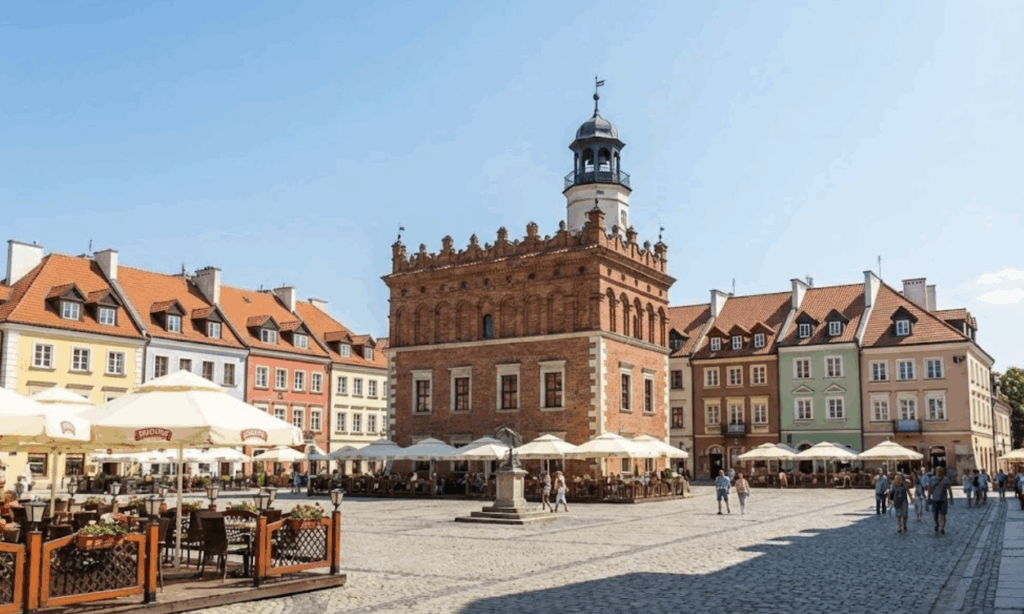
The Market Square and Town Hall
The heart of Sandomierz beats in its Market Square (Rynek), where colourful Renaissance and Baroque townhouses create a postcard-perfect scene. The 14th-century Town Hall dominates the square, though its current appearance reflects modifications from the 16th and 17th centuries. The building’s rectangular shape and distinctive tower were added over time, giving it that slightly quirky, asymmetrical charm that makes Polish architecture so endearing.
Grab a coffee at one of the square’s cafés and simply watch life unfold – it’s the kind of place where locals still chat on benches and horse-drawn carriages occasionally clip-clop past.
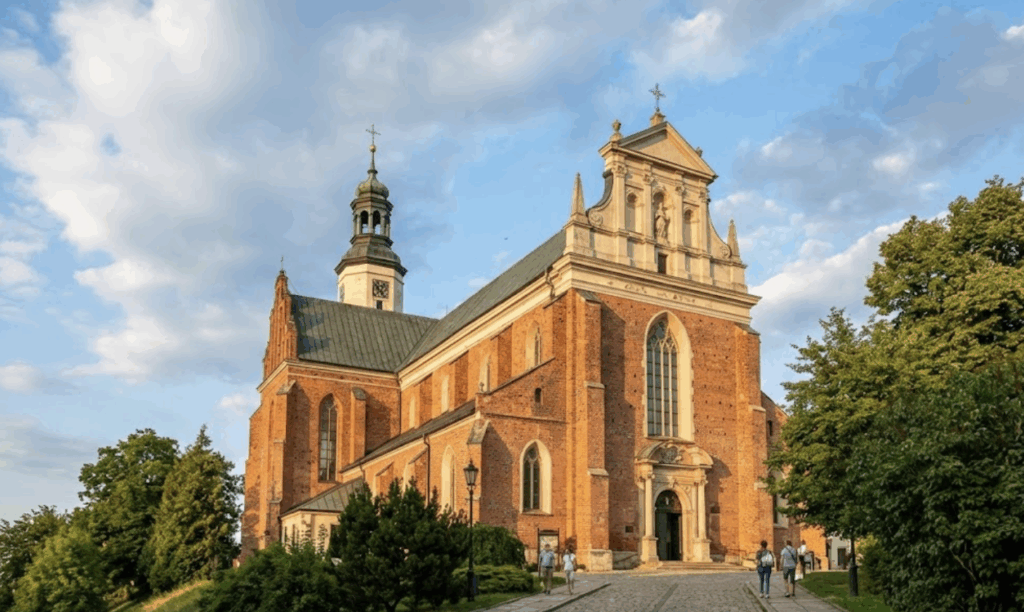
Sandomierz Cathedral
The Cathedral Basilica of the Nativity of the Blessed Virgin Mary stands as one of Sandomierz’s crown jewels. Its richly decorated interior features stunning Baroque and Rococo elements, Byzantine-Ruthenian frescoes that are rare treasures in Poland, and an atmosphere of quiet majesty. The cathedral’s history stretches back centuries, and every corner seems to whisper stories of royal visits and sacred ceremonies.
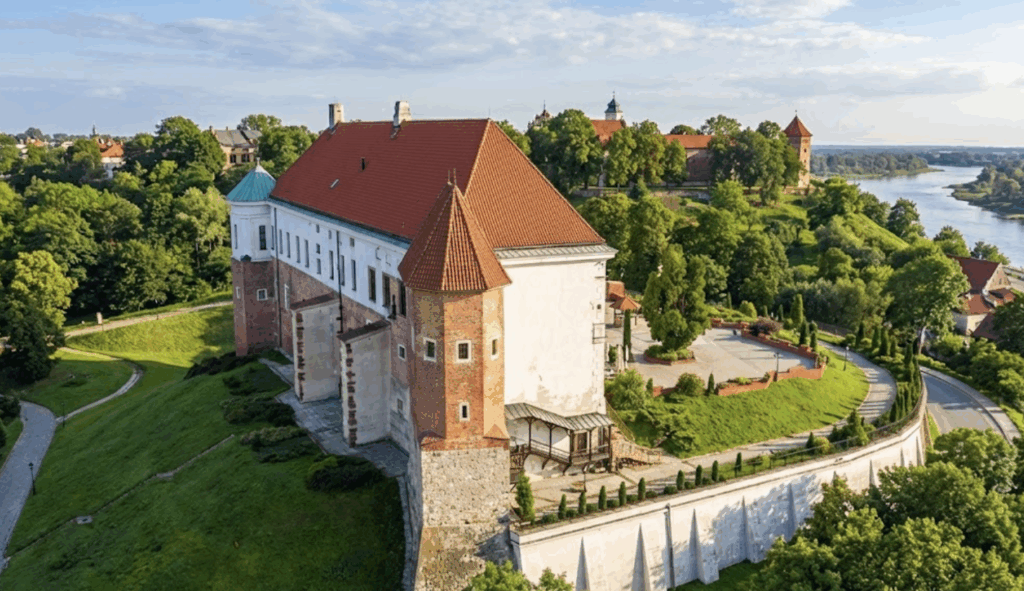
The Royal Castle
Erected on the site of a 10th-century fortress, the Royal Castle now houses a fascinating museum. While only portions of the original structure survived various historical upheavals, what remains offers captivating insights into Sandomierz’s noble past. The castle’s elevated position also provides brilliant views across the Vistula valley – bring your camera.
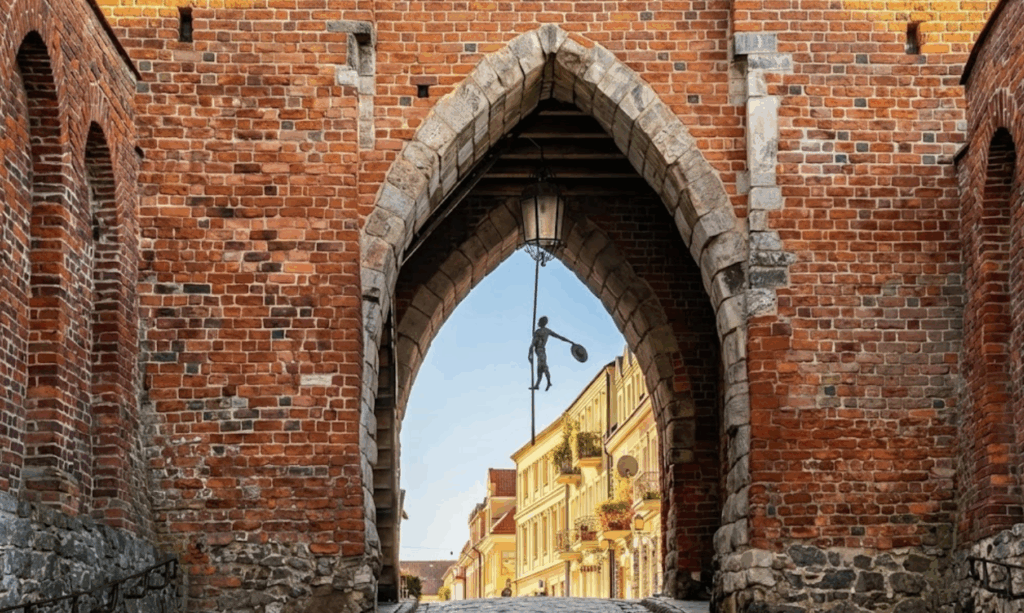
Opatowska Gate
Of all Sandomierz’s medieval gates, only the 16th-century Gothic Opatowska Gate remains standing. Climb to the top for an awesome panorama of the Old Town, the river, and surrounding countryside. It’s a bit of a workout, but the views are absolutely worth every step.
Journey Beneath the Streets: The Underground Tourist Route
Here’s where Sandomierz gets truly intriguing. Beneath those charming cobblestone streets lies a 470-metre network of tunnels, cellars, and chambers spanning multiple levels – some descending as deep as 12 metres underground.
This subterranean maze wasn’t originally designed as a tourist attraction. These passages were once merchant cellars and storage spaces, used for centuries by traders and townspeople. In 1963, when structural collapses and subsidences threatened the Old Town, experts from Kraków’s Academy of Mining and Metallurgy launched an ambitious rescue project. Their work connecting and securing these underground spaces inadvertently created what would become the Underground Tourist Route, which opened to visitors in 1977 and has been welcoming curious explorers ever since.
The atmosphere down here is genuinely atmospheric – slightly eerie, definitely mysterious, and utterly fascinating. Your guide will share tales of secret passages (locals swear some tunnels stretch under the Vistula all the way to Baranów Sandomierski Castle, though that remains unproven), medieval trade, and the creative ways residents used these spaces over the centuries.
Practical details: The Underground Route is open April-September from 9am-6pm, and October-March from 9am-4pm. Entry costs 23 PLN for adults and 19 PLN for concessions. The tour takes roughly an hour, and temperatures underground remain cool year-round, so bring a light jacket.
Want to experience Sandomierz’s highlights with expert guidance? Consider booking the Sandomierz: Private City Tour With Underground Route, a comprehensive 3-hour walking tour that combines the Old Town’s key landmarks with exclusive Underground Route access. Your licensed guide will tailor the experience to your interests, ensuring you don’t miss hidden details that independent visitors often overlook.
Natural Wonders: Ravines and Ancient Hills
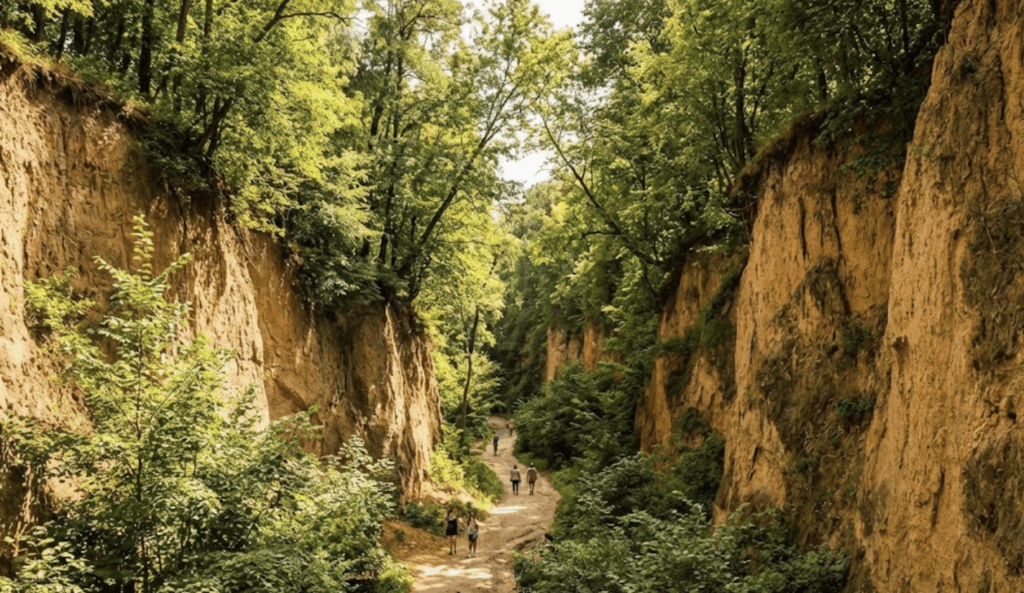
Queen Jadwiga’s Ravine
Step away from the architectural treasures and discover Sandomierz’s stunning natural side. The Ravine of Queen Jadwiga (Wąwóz Królowej Jadwigi) is a mesmerising loess gorge carved over centuries by flowing water. Stretching about 500 metres and rising up to 15 metres high, this picturesque ravine offers a tranquil escape where ancient tree roots protrude dramatically from sandy walls.
The ravine retains its enchanting beauty across all seasons – even in winter, when bare trees create striking silhouettes against the loess formations. Visit during early morning or late afternoon for the best light and fewer crowds. Comfortable walking shoes are essential, as the terrain can be uneven.
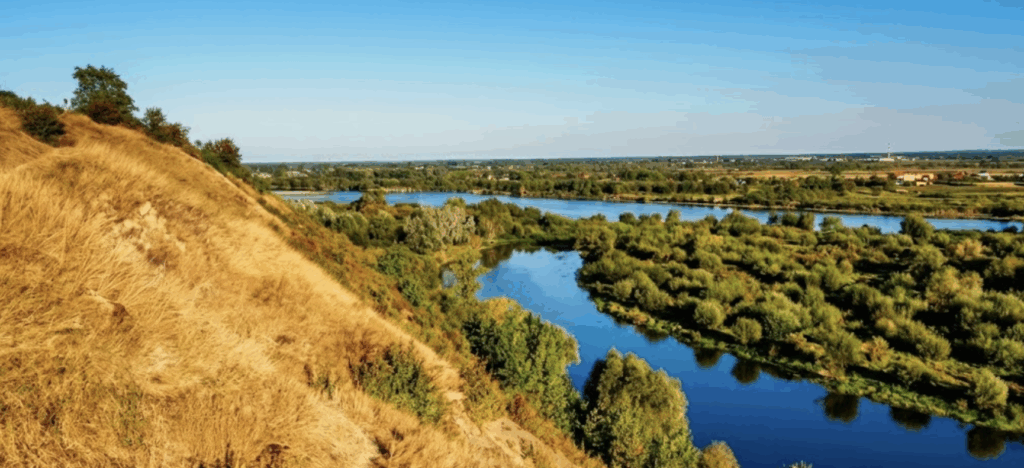
The Pepper Mountains
Just a few kilometres from Sandomierz’s centre lie the Góry Pieprzowe (Pepper Mountains) – a nature reserve featuring hills built from Cambrian shales that are approximately 500 million years old. Yes, you read that correctly: half a billion years. These crumbly, pepper-coloured rocks make the Pepper Mountains among Poland’s oldest geological formations.
The reserve hosts remarkable xerothermic and steppe plants rarely found elsewhere in Poland. A red-marked trail (roughly 0.6 km, taking about 15-20 minutes) leads from a free car park on Błonie Street through the old Vistula riverbed to the distinctive shale hills. Be warned: the shales are extremely crumbly and slip underfoot, so sturdy footwear is absolutely necessary – sandals won’t cut it here.
The reserve apparently looks most spectacular in spring when wild roses bloom, transforming the ancient hills into a fragrant, colourful wonderland. Free parking is available at the end of Błonie Street in the Kamień Plebański housing estate.
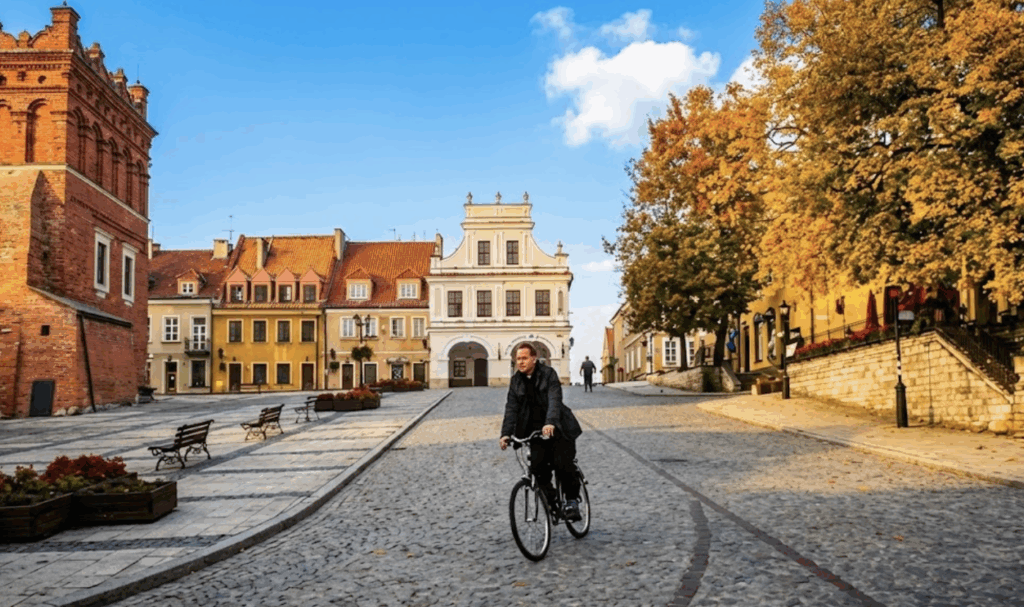
Sandomierz’s Cultural Spotlight
Sandomierz has achieved unexpected fame as the primary filming location for Ojciec Mateusz (Father Matthew), Poland’s beloved detective television series that has aired on TVP1 since November 2008. This Polish adaptation of the Italian series Don Matteo follows a Catholic priest who solves crimes while tending to his Sandomierz parish.
The show has significantly boosted Sandomierz’s profile across Poland, with fans making pilgrimages to recognise locations from their favourite episodes. The series has spawned over 30 seasons and 440+ episodes, making Sandomierz’s Old Town one of Polish television’s most-filmed locations. You’ll even find a small museum dedicated to the show – the Świat Ojca Mateusza (World of Father Matthew) – featuring wax figures of the main characters.
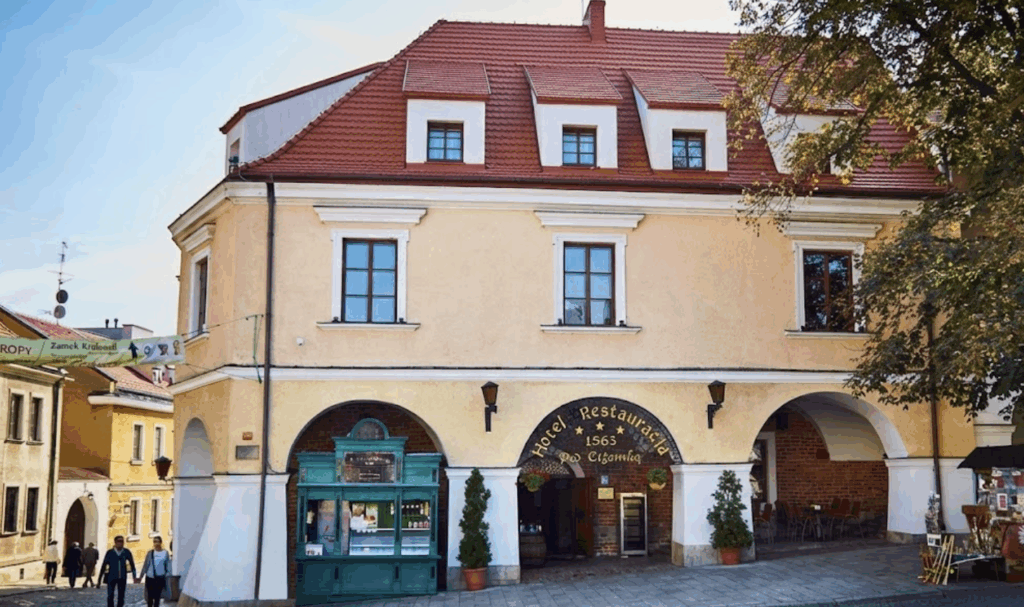
Where to Stay: Hotel Pod Ciżemką
For an authentic Sandomierz experience, consider Hotel Pod Ciżemką, a charming three-star hotel occupying a historic townhouse dating back to 1563. Located right on the Market Square at Rynek 27, you’ll be steps away from every major attraction.
The hotel beautifully balances historical character with modern comfort. Its historical interiors, regional cuisine restaurant, wine bar, and both winter and summer terraces create an atmosphere that perfectly captures Sandomierz’s blend of old-world charm and contemporary hospitality. The location simply can’t be beaten – fall asleep and wake up in the very heart of this medieval gem.
Practical Travel Tips
Best time to visit: Late spring (May-June) and early autumn (September-October) offer the most pleasant weather with fewer crowds. Summer brings warmth but also peak tourist season. Winter has its own quiet charm, though some attractions may have reduced hours.
Getting there: Sandomierz lies roughly 200 km southeast of Warsaw and 160 km east of Kraków. While public transport connections exist, renting a car offers the most flexibility for exploring the surrounding Świętokrzyskie region.
Local cuisine: Don’t leave without trying regional specialities. Sandomierz’s location in wine country means excellent local wines are available. The area is also known for traditional Polish dishes with a regional twist – look for restaurants serving pierogi (dumplings), bigos (hunter’s stew), and local river fish.
Language: English is increasingly spoken in tourist areas, though knowing a few basic Polish phrases will be appreciated. Most restaurants and hotels catering to visitors will have English-speaking staff.
Duration: A thorough exploration of Sandomierz deserves at least two days – one for the Old Town and Underground Route, another for the natural attractions and perhaps a wine-tasting excursion in the surrounding vineyards.
Why Sandomierz Belongs on Your Polish Itinerary
Sandomierz offers something increasingly rare in European travel: authenticity without overwhelming crowds, historical significance without commercialisation, and natural beauty woven seamlessly into cultural heritage.
While Kraków and Warsaw certainly deserve their popularity, Sandomierz provides a counterpoint – a glimpse of Poland as it existed for centuries, where locals still outnumber tourists and where you can explore atmospheric medieval streets without constantly dodging tour groups.
The combination of above-ground architectural splendour and below-ground mysteries creates a uniquely layered experience. Add in the dramatic natural landscapes and friendly local atmosphere, and you’ve got a destination that lingers in memory long after you’ve left.
Poland’s “Little Rome” might be little known, but it’s big on charm, history, and authentic Polish character. Isn’t it time you discovered it for yourself?

Bartosz
Bartosz is a travel writer, photographer & founder/editor of theuniquepoland who tells stories of adventure, history and current affairs. He writes mainly about travel, with special focus on Poland. He loves travelling, discover new unknown and inspire others.


You May Also Like

Interesting Facts About Poland That Will Surprise You
Barbican in Krakow
