Zakopane Travel Guide: Everything You Need to Know About Poland’s Winter Capital
If you think Poland is just pierogi and flat plains, prepare to have your mind blown (and your calves burn). Nestled at the foot of the Tatra Mountains, Zakopane isn’t just a town; it’s a mood. It’s where adrenaline junkies go to throw themselves down snowy slopes, where hikers go to question their life choices on steep ascents, and where everyone else goes to eat copious amounts of smoked cheese while wearing fuzzy slippers.
Known affectionately as the “Winter Capital of Poland,” Zakopane is the kind of place that looks like it fell out of a snow globe. But don’t let the “winter” title fool you—this alpine paradise is spectacular all year round. Whether you’re here to shred powder, soak in thermal baths until you’re prune-like, or simply breathe in air that doesn’t taste like city smog, Zakopane delivers.
Ready to swap the concrete jungle for actual peaks? Let’s dive into the ultimate guide to Zakopane.
When to Visit: Snowy Peaks or Lush Valleys?
Zakopane has a bit of a split personality, and honestly, we love both sides of it. The best time to visit entirely depends on whether you prefer freezing your nose off or sweating it off.
Winter (December to March)
This is prime time. The town transforms into a winter wonderland that would make Elsa jealous. Skiers and snowboarders flock here for the slopes, and the streets of Krupówki are buzzing with energy (and the smell of mulled wine).
- Pros: Magical atmosphere, Christmas markets, top-tier skiing, and snowmobiling.
- Cons: It’s crowded. Like, “sardines in a tin” crowded. Prices also hike up faster than a mountaineer on espresso.
Summer (June to August)
When the snow melts, the Tatras reveal lush green valleys and rocky peaks perfect for hiking. The weather is generally mild, making it ideal for conquering Giewont or lounging by a mountain lake.
- Pros: All hiking trails are open, the weather is lovely, and the days are long.
- Cons: Thunderstorms can roll in quickly in the afternoons, and the popular trails (we’re looking at you, Morskie Oko) can feel like a queue at a theme park.
Shoulder Seasons (April-May & September-November)
If you hate crowds and love saving money, this is your sweet spot. Autumn, in particular, is stunning as the foliage turns golden. Just pack layers—Polish weather likes to keep you guessing.
Getting There: The Road to the Mountains
Zakopane is located in the southernmost part of Poland, right near the Slovakian border. most travellers arrive via Krakow, the nearest major city with an international airport.
The Bus (The Budget-Friendly Hero)
Buses run from Krakow’s main station (MDA) to Zakopane frequently—often every 20 minutes or so. The journey usually takes around 2 to 2.5 hours, depending on traffic.
- Tip: FlixBus is a reliable option, but local private minibuses (szwagropol) are often faster and cheaper.
The Train (The Scenic Route)
Trains are available, but be warned: they can be slower than buses due to the winding mountain tracks. However, the views are fantastic, and you don’t have to worry about getting stuck in the infamous “Zakopianka” traffic jams.
The Stress-Free Option (Day Tours)
If the idea of navigating foreign public transport schedules makes you break out in hives, or if you’re short on time, booking a day trip is a brilliant move. You get picked up, dropped off, and often get a guide to explain exactly what you’re looking at.
If you’re staying in Krakow and want to see the highlights without the hassle, check out this Zakopane Tour with Hot Springs and Hotel Pickup. It covers the transport, takes you to the best spots, and ensures you’re back in time for a late dinner.
Top Attractions: What Not to Miss
You’ve arrived, you’ve unpacked, you’ve taken a selfie. Now what? Here are the heavy hitters of Zakopane sightseeing.
Kasprowy Wierch
This isn’t just a mountain; it’s an institution. You can hike up if you’re feeling particularly energetic (and masochistic), but most people take the iconic cable car from Kuźnice.
- The Experience: The ride takes about 20 minutes with a transfer at Myślenickie Turnie. At the top (1,987m), you can straddle the border between Poland and Slovakia.
- Pro Tip: Buy your tickets online in advance. The queue for the ticket office can be soul-destroyingly long, especially in peak season.
Morskie Oko (The Eye of the Sea)
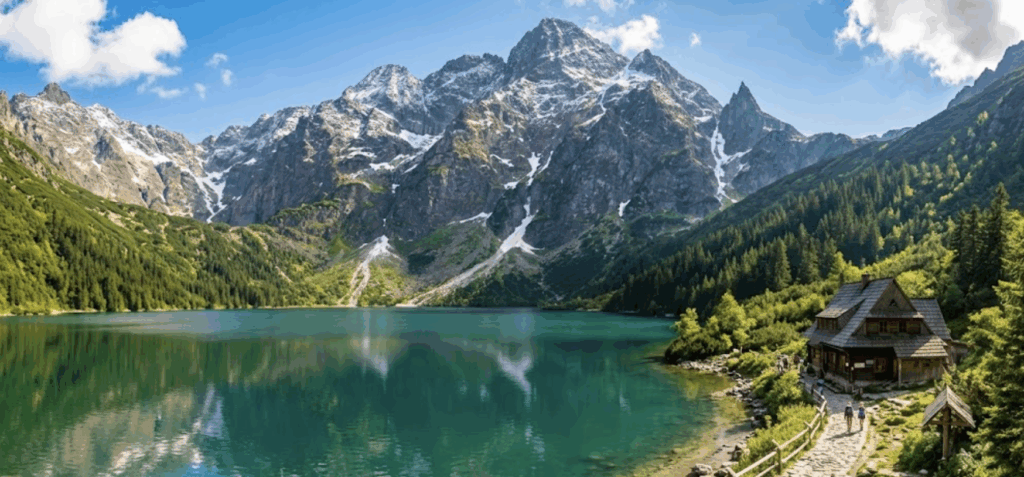
If you leave Zakopane without seeing Morskie Oko, did you even go? It is arguably the most beautiful lake in the Tatra Mountains, reflecting the jagged peaks surrounding it like a giant mirror.
- The Trek: It’s an 8km paved walk from the Palenica Białczańska car park. It’s easy but long.
- Lazy Option: You can take a horse-drawn carriage most of the way up, but walking earns you that extra dessert later.
Gubałówka Hill
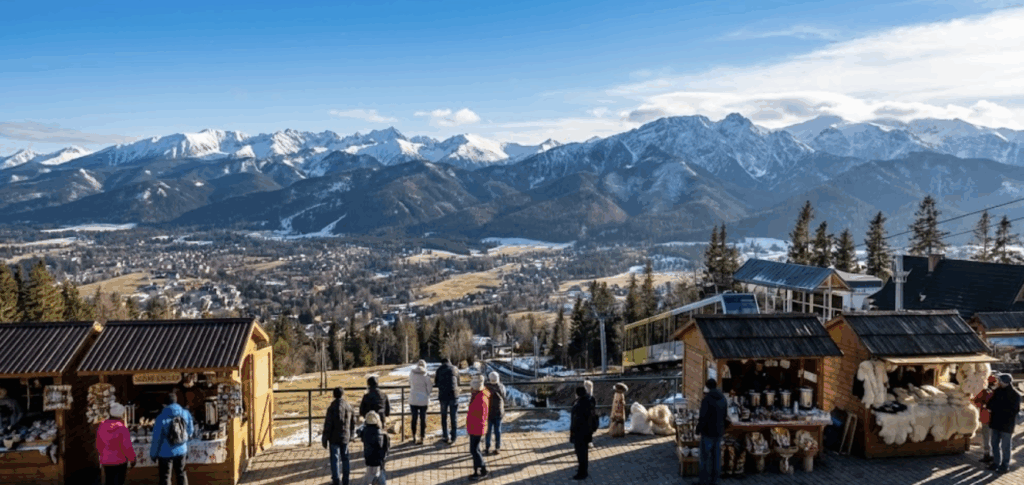
For the best panoramic view of the Tatras without actually climbing them, head to Gubałówka. You can take a funicular train right from the centre of Zakopane.
- What to do: At the top, there’s a market, restaurants, and gravity slides. It’s very touristy, but the view of the Sleeping Knight (Giewont mountain) is worth the ticket price.
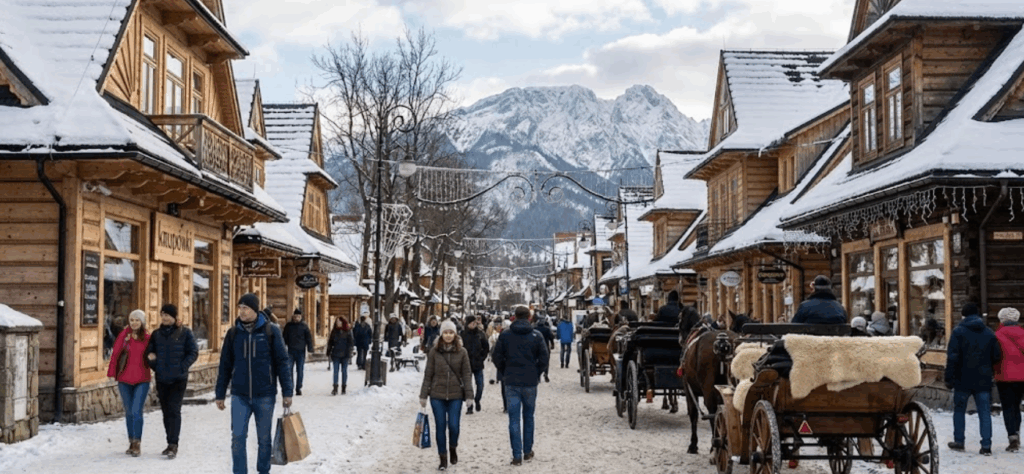
Krupówki Street
The heart and soul of Zakopane. This pedestrian street is lined with shops, restaurants, and street performers. It’s where you go to buy sheepskin rugs you don’t need and wooden spoons you’ll definitely lose.
Adventure and Sports: For the Thrill Seekers
Zakopane isn’t called the Winter Capital for nothing. If you prefer your holidays with a side of adrenaline, you’re in the right place.
Skiing and Snowboarding
There are slopes for everyone here.
- Beginners: Head to Nosal or Szymoszkowa. Wide, gentle slopes and plenty of instructors who won’t laugh (too much) when you fall.
- Pros: Kasprowy Wierch offers the only alpine-style skiing in Poland. It’s steep, challenging, and absolutely thrilling.
Hiking
In summer, the Tatras offer some of the best hiking in Europe.
- Easy: Dolina Kościeliska or Dolina Strążyska. Beautiful valleys, flat walking, minimal sweating.
- Hard: Orla Perć. This is the most dangerous trail in Poland, involving chains and ladders. Only attempt this if you have experience and a head for heights.
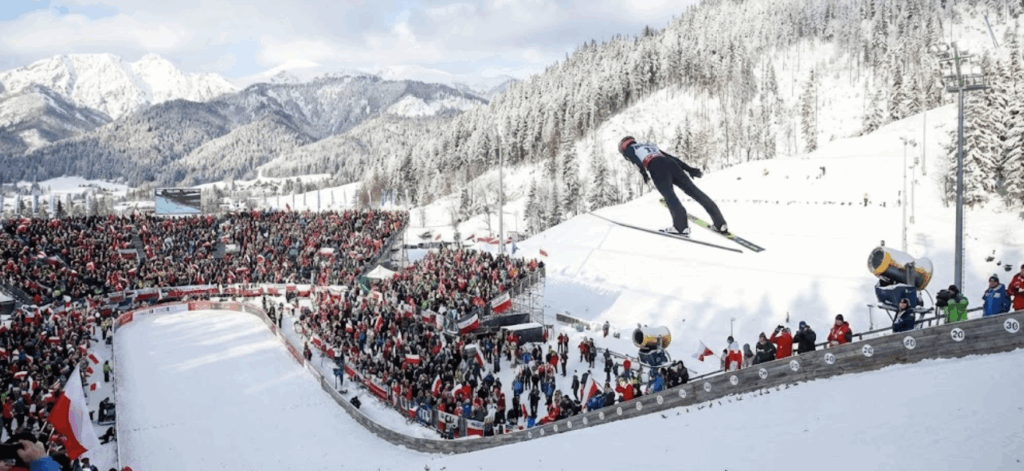
Ski Jumping
Zakopane is famous for hosting the Ski Jumping World Cup. Even if you aren’t jumping yourself (please don’t), visiting the Great Krokiew jump is impressive. You can take a chairlift to the top and look down to see just how crazy those athletes really are.
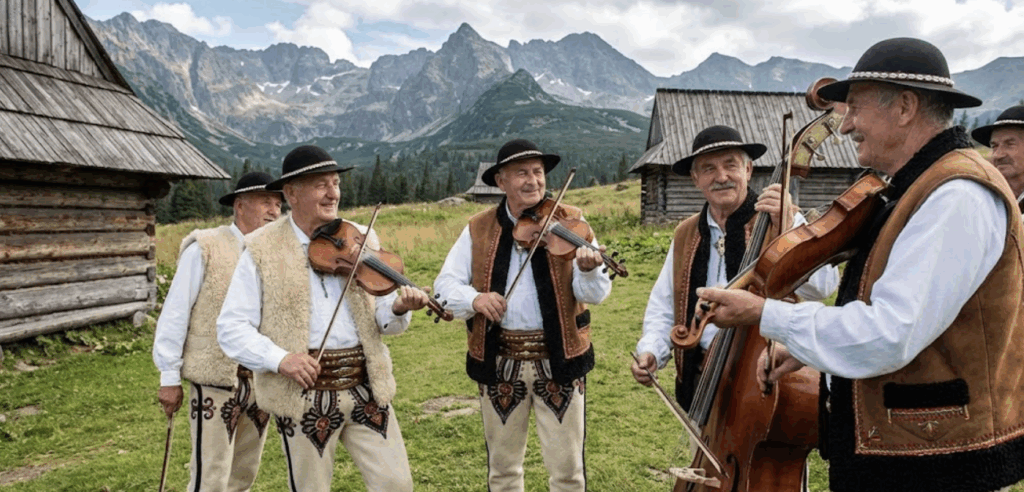
Cultural Experiences: More Than Just Mountains
The locals here, known as Górale (Highlanders), have a distinct culture, dialect, and style that is completely unique to this region.
Highlander Folklore
You’ll hear it before you see it. The music is energetic, violin-heavy, and involves a lot of stomping. Many restaurants on Krupówki offer live folk music in the evenings.
Wooden Architecture Style
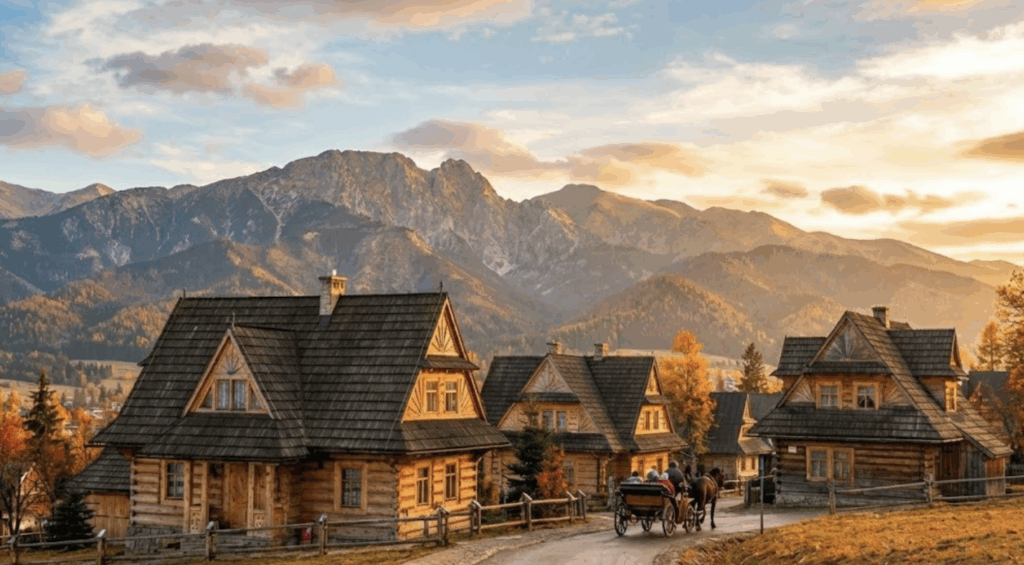
Zakopane has its own architectural style (Styl Zakopiański), pioneered by Stanisław Witkiewicz. It features intricate wood carvings, steep roofs, and stone foundations.
- Must-See: Visit the Villa Koliba Museum or the Jaszczurówka Chapel to see prime examples of this fairytale craftsmanship.
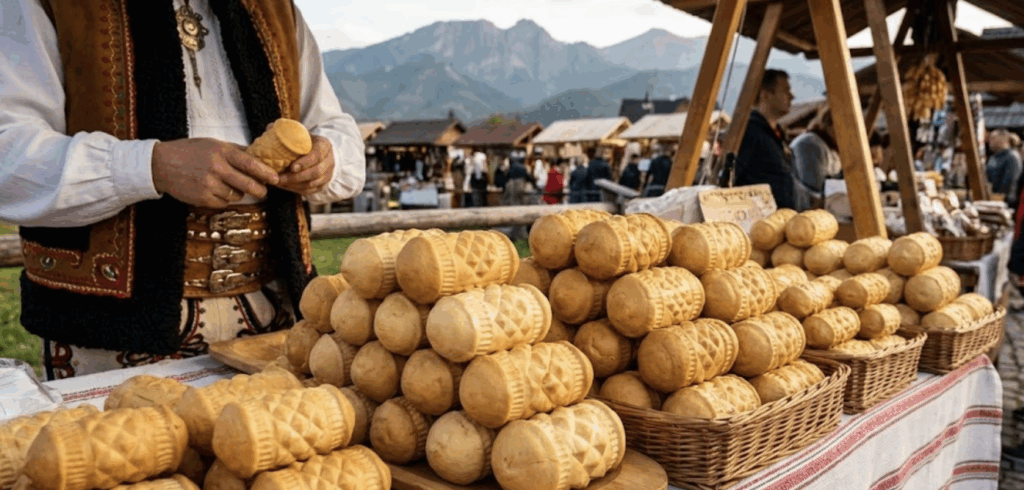
Oscypek: The Cheese of the Gods
You cannot come here and not eat Oscypek. It is a smoked cheese made from salted sheep milk, found exclusively in the Tatra Mountains. It’s protected by EU law, so you know it’s legit.
- How to eat it: Grilled, served with cranberry jam. It sounds odd, but it’s a flavour combination that will change your life. You’ll find little wooden huts selling it on every street corner.
Relaxation: Soak Your Worries Away
After hiking 20km or skiing for six hours, your muscles will be screaming. The solution? Thermal baths. The region is sitting on a hotbed of geothermal activity.
Chochołowskie Termy
The biggest and most modern complex. It has over 30 pools, a massive sauna zone, and spectacular views of the mountains. It’s basically a water park for adults who need a break.
Terma Bania
Located in Białka Tatrzańska, this one is great for families. It’s divided into a fun zone (slides!) and a relax zone (silence!).
Bukovina Termy
A huge complex surrounded by forests. It feels a bit more secluded and nature-focused.
Practical Tips for Surviving Zakopane
To ensure your trip is as smooth as a freshly groomed ski run, keep these tips in mind.
Packing Essentials
- Layers: The weather in the mountains is bipolar. It can be sunny one minute and hailing the next.
- Sturdy Shoes: Even if you’re just walking down Krupówki in winter, it gets slippery. Leave the stilettos at home.
- Cash (Złoty): While cards are widely accepted, some smaller souvenir stalls, mountain huts, and the entry to the National Park might prefer cash.
Getting Around
Walking is your best bet for the town centre. For trailheads, local mini-buses are cheap and frequent. They have signs in the window stating their destination. Just wave one down, hop in, and pay the driver.
Accommodation
Book early! Especially for Christmas, New Year, and the school holidays (February). The best wooden chalets disappear months in advance.
Final Thoughts
Zakopane is a place that stays with you. Maybe it’s the grandeur of the Tatras, the taste of warm Oscypek, or the sound of Highlander violins echoing in a wooden tavern. Whether you’re conquering peaks or conquering a plate of pierogi, this mountain town offers an escape that feels both wild and welcoming.
So, pack your boots, practice your pronunciation of “Dziękuję” (Jenny-koo-ye), and get ready for an adventure. The mountains are calling, and they have cheese.

Bartosz
Bartosz is a travel writer, photographer & founder/editor of theuniquepoland who tells stories of adventure, history and current affairs. He writes mainly about travel, with special focus on Poland. He loves travelling, discover new unknown and inspire others.


You May Also Like
Hel Peninsula: Poland’s Baltic Sandbar You’ll Never Forget

Kazimierz: Exploring Krakow’s Historic Jewish Heart