Chochołow: Poland’s Most Charming Highland Village
There are places in the world that stop you in your tracks. Not because of a towering monument or a Michelin-starred restaurant, but because they feel genuinely, impossibly alive with history. Chochołów is one of those places.
Tucked away in the foothills of the Tatra Mountains in southern Poland, this small village of around 1,100 people looks like something out of a fairytale — if fairytales were written by Polish highlanders with very strong opinions about woodwork.
Located roughly 101 km south of Kraków and about 20 km from Zakopane, Chochołów sits in Lesser Poland Voivodeship, close to the Slovak border. Most travellers breezing through the region head straight for Zakopane without a second thought.
That’s their loss. Because Chochołów, with its centuries-old wooden cottages, living folk traditions, and world-class thermal baths just down the road, is arguably the most complete highland experience you’ll find anywhere in the country.
Architectural Heritage: The Famous 19th-Century Wooden Cottages
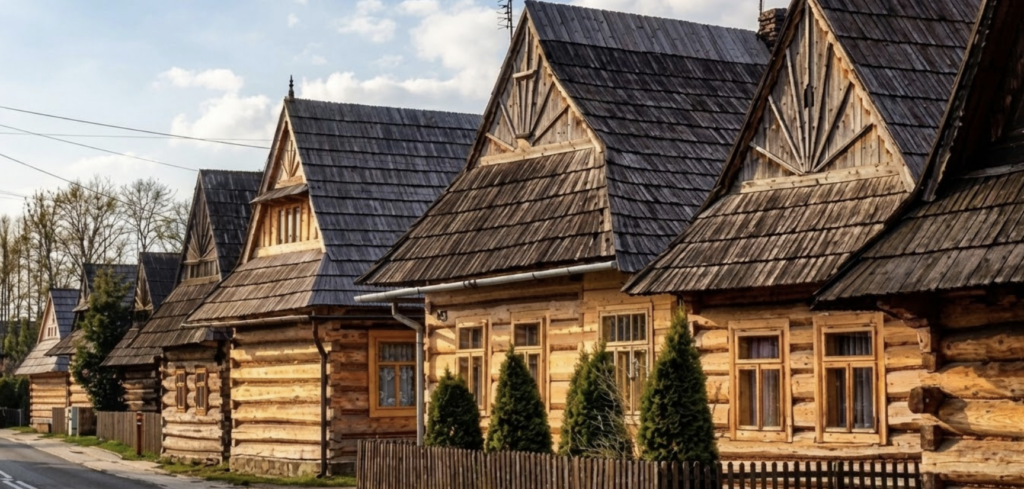
Walk down Chochołów’s main street and you’ll immediately notice something unusual: nearly every building is made entirely of wood. Not decorative wood panels. Not a wood-effect finish. Actual, beautiful, aged timber — and lots of it.
The village is comprised almost entirely of heritage Polish wooden houses known as góralskie chaty, built by the Gorals, the indigenous highland people of the Podhale region. The unique old centre is famous for its preserved 19th-century wooden cottages, with a few still-standing 18th-century houses thrown in for good measure.
The houses are arranged in a distinctive way, too — positioned with their shorter sides facing the street, sitting so closely together that there’s barely room for a fence between them.
It’s essentially a living, breathing open-air museum. Except that people actually live here, which makes it even more extraordinary. You’re not looking at a reconstruction — you’re looking at the real thing, maintained and inhabited by real families who take their heritage seriously.
The Spring Cleaning Tradition: Why Those Houses Are So Brilliantly White
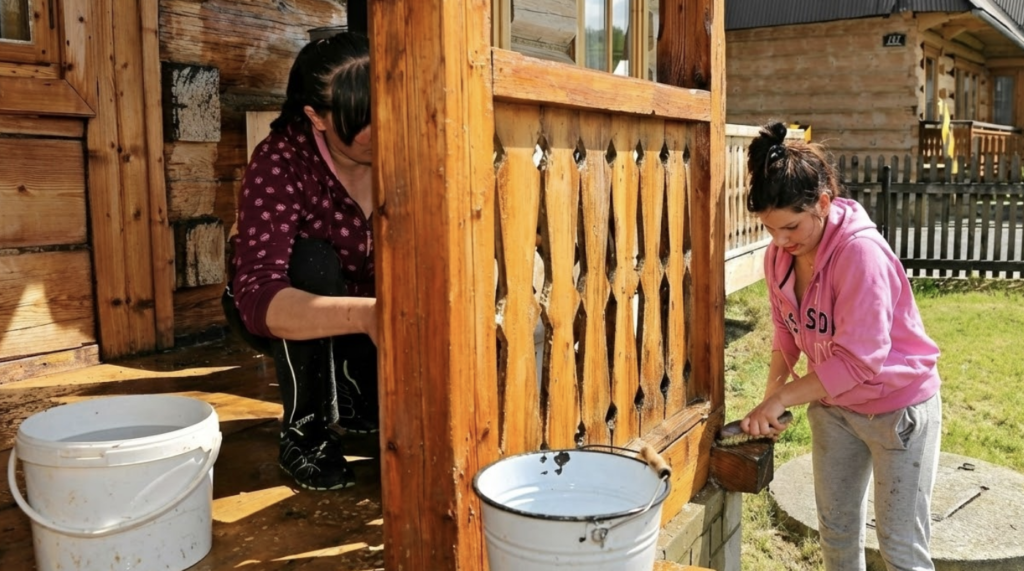
Here’s where things get genuinely fascinating. Every year before Easter, the residents of Chochołów carry out a tradition that has been practised for generations: they wash their houses. The whole exterior. By hand.
The timber façades are scrubbed down and treated, keeping them bright and well-maintained in a ritual that’s as much a community event as it is a practical task. The result? A street of gleaming, luminous wooden homes that look freshly finished even though some of them are over 200 years old.
If you happen to visit in spring, you might catch the village mid-clean — a sight that’s both charming and slightly humbling for anyone who considers wiping down a kitchen counter an achievement.
This tradition speaks to something deeper about Chochołów’s character: a fierce pride in place, heritage, and community. The Gorals don’t preserve their village for tourists. They preserve it because it’s theirs.
Cultural Significance: Goral Customs, History, and Local Crafts
Chochołów was founded in the 16th century by Bartłomiej Chochołowski, appointed hereditary village leader by Polish King Stephen Báthory as a reward for his merits in battle. It’s had quite a turbulent history since — most notably as the site of the Chochołów Uprising of 1846, when local highlanders rose up against Austrian occupation during the Partitions of Poland.
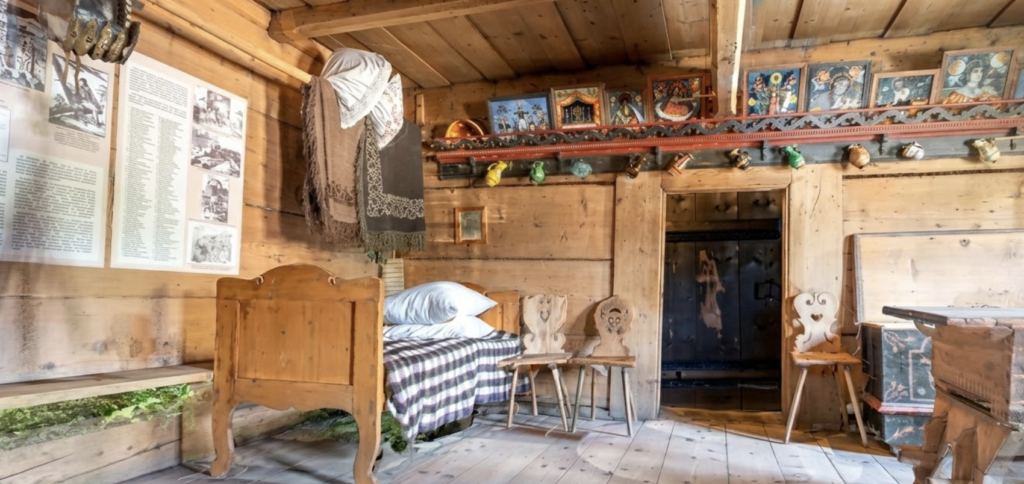
The uprising was eventually crushed, but the spirit behind it wasn’t. You can learn more at the Chochołów Uprising Museum, which is itself housed in one of the old wooden buildings.
Beyond the history, the village is a hub of Goral folk culture. The Gorals are known across Poland for their distinctive traditions — including embroidered costumes, folk music played on the fujara (a long shepherd’s flute), and a style of sheep’s cheese called oscypek that’s been granted protected designation of origin status by the EU. If someone offers you a slice, accept it immediately.
Local craftspeople continue to work in traditional styles — folk sculptor Jan Zięder, for instance, is known for creating naïve wooden figures from one of the village’s old houses.
Top Things to Do in and Around Chochołów
Visit the Chochołowskie Termy thermal baths. Opened in 2016 using hot mineral springs from the Dolina Chochołowska valley in the Tatra Mountains, the Chochołowskie Termy is one of the largest thermal spa complexes in Poland. There are outdoor pools with mountain views, water slides, a saunarium, pool bars, and dedicated zones for kids. It’s the kind of place you arrive at thinking you’ll stay an hour and leave three hours later, slightly pruney but deeply relaxed.
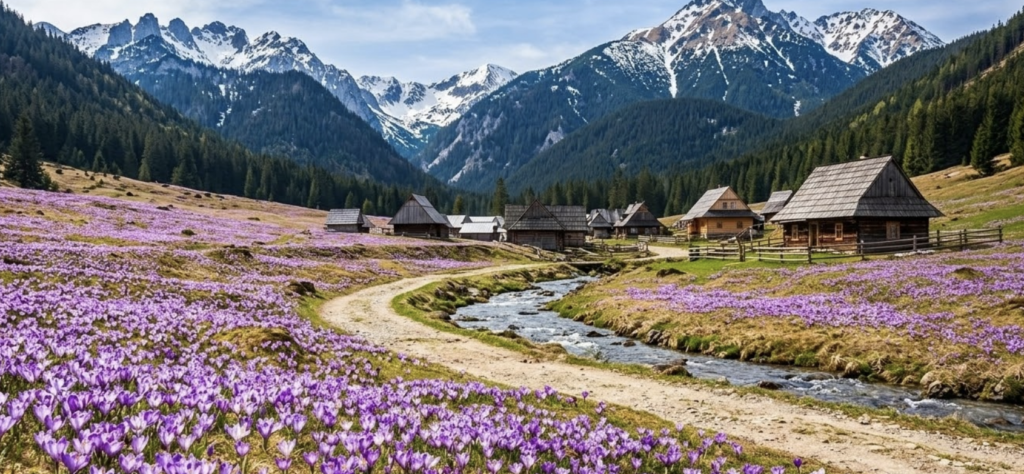
Hike into the Chochołowska Valley. One of the longest and most beautiful valleys in Polish Tatra, the Chochołowska Valley is accessible from the village and offers hiking trails through meadows and mountain terrain, particularly spectacular in late spring when alpine flowers are in bloom.
Explore Zakopane. Just 20 km away, Zakopane is the cultural capital of the Polish mountains — a lively town with a famous pedestrian street (Krupówki), a funicular up Gubałówka Hill with panoramic Tatra views, and enough highland food and folk art to keep you busy for a day.
Take a day trip from Kraków. If you’re based in Kraków, a brilliant way to see all of this in one go is the Krakow–Zakopane: Cable Car, Chochołów Baths, Cheese & Vodka day tour. Rated 4.8/5 across over 9,000 reviews on GetYourGuide, the 11-hour tour includes hotel pickup, a stop in Chochołów village with a cheese and local vodka tasting, free time in Zakopane, a ride up the Gubałówka funicular, and three full hours at the Chochołowska Thermal Baths. It’s a genuinely well-organised day out that packs in an enormous amount — and given that the guide, transport, funicular ticket, and bath entry are all included, the logistics couldn’t be easier.
Practical Travel Tips: Getting There, When to Go, and What to Eat
Getting there. Chochołów sits about 101 km south of Kraków by road. By car, the journey takes roughly 1.5 to 2 hours depending on traffic.
Buses run from Nowy Targ (about 19 km northeast of the village). Alternatively, the guided day tour from Kraków mentioned above handles all transport for you — which is worth considering if you want a stress-free experience.
Best time to visit. Spring is magical here, particularly if you want to catch the house-washing tradition before Easter. Summer brings hiking weather and full thermal bath season.
Winter is dramatic — the mountains are snow-capped, the termy are blissfully warm, and the village has a quiet, almost mystical quality. There’s honestly no bad time to visit; it just depends what you’re after.
What to eat. Go for the oscypek — the smoked sheep’s cheese, grilled and served with cranberry jam, is the definitive highland snack.
Żurek (a sour rye soup) and bigos (hunter’s stew) are excellent hearty options for colder months. And yes, you should try the local vodka. It’s tradition.
Why Chochołów Is Poland’s Most Picturesque Hidden Gem
Chochołów doesn’t compete for attention. It doesn’t have to. With its rows of luminous wooden cottages, pre-Easter scrubbing rituals, a thermal spa that would make a Swiss resort envious, and direct access to the Tatra Mountains, it offers a depth of experience that far exceeds its modest size.
Most visitors to Poland will see Kraków’s Old Town and call it a trip. Nothing wrong with that — Kraków is extraordinary. But if you make it as far as the southern highlands and skip Chochołów, you’ve genuinely missed something special.
Get there early, walk the main street slowly, eat the cheese, and if the weather cooperates, finish the day floating in a geothermal pool with a mountain backdrop. You’ll wonder why it took you this long to find it.

Bartosz
Bartosz is a travel writer, photographer & founder/editor of theuniquepoland who tells stories of adventure, history and current affairs. He writes mainly about travel, with special focus on Poland. He loves travelling, discover new unknown and inspire others.



One Comment
Benny
One major thing that got my attention in this article is the wooden houses. It is so nice to know that these structures still exist and are functioning well. I must say this Is a place to visit but I have plans on going to Gdansk.. If my resources permit them I will be glad to take a tour through here. I must thank you once again for this article