The Polish Winged Hussars: Europe’s Most Fearsome Cavalry
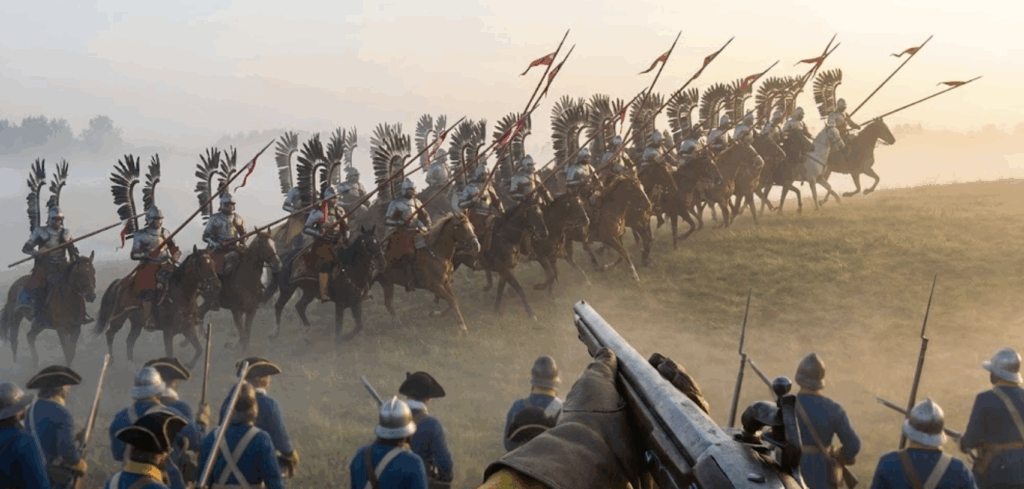
Picture this: you’re a Swedish infantryman at dawn on 27 September 1605, standing in formation near Kircholm. Then you see them—thousands of armoured horsemen thundering down from the hills, their backs adorned with enormous wooden frames bristling with eagle feathers, their 19-foot lances gleaming in the morning sun. The ground shakes. Your officers shout orders, but it’s already too late.
Welcome to the terrifying world of the Polish Winged Hussars, perhaps the most elite—and certainly the most theatrical—cavalry force in European history.
From Mercenaries to Legends: The Hussar Evolution
The story of the Winged Hussars begins not with Polish nobility, but with Serbian mercenaries. The word “hussar” derives from the Serbian “gusar,” meaning “wanderer” or “brawler”—fitting origins for what would become Europe’s most formidable shock cavalry.
The first hussars appeared in Polish military records in 1500, when Grand Treasurer Andrzej Kościelecki hired Rascian warriors from Hungary. By 1503, the Sejm (Polish parliament) had formally established three Hungarian hussar banners. These early units were light cavalry—fast, mobile, and lightly armoured—perfect for raids and reconnaissance.
But everything changed under King Stephen Báthory (1576–1586). During his reign, Polish military reformers transformed the hussars from nimble skirmishers into heavily armoured shock troops. By the 1590s, most hussar units had been reformed into what became known as the husaria—the heavy model that would dominate European battlefields for the next century.
This wasn’t just a tactical shift; it was a complete reimagining of cavalry warfare. The hussars became the spearhead of Polish-Lithuanian military power, replacing medieval-style lancers as the elite core of the Commonwealth’s forces.
Those Famous Wings: Fact vs. Fiction
Let’s address the elephant in the room—or rather, the wings on the back.
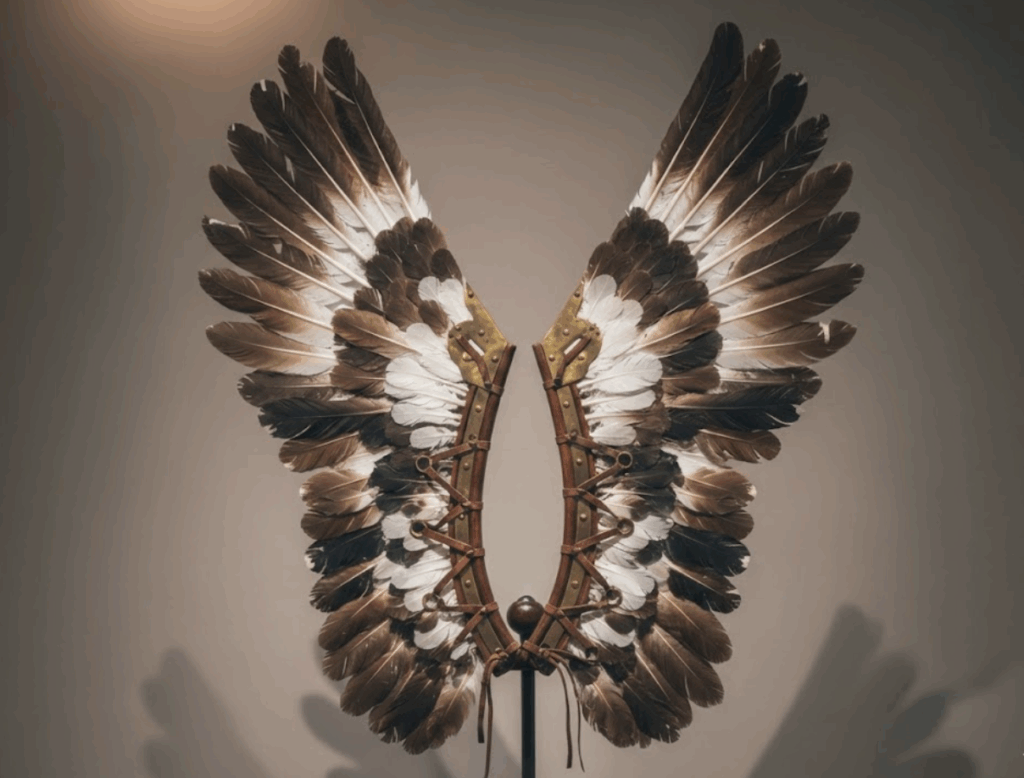
Contrary to popular imagination, those iconic wings weren’t always present, nor were they primarily combat equipment. Research from the Polish Army Museum in Warsaw reveals a surprising truth: early hussars didn’t use wings at all. The first known depiction of Polish cavalry, the 1514 painting of the Battle of Orsha, shows them as light cavalry without either armour or wings.
Wings first appeared in the mid-16th century, initially mounted on shields. The familiar back-mounted wings we associate with hussars today emerged around 1605, during the reign of King Sigismund III. Contemporary records—like the Stockholm Roll depicting Queen Constance’s 1605 entry into Kraków—show hussars with single wings of black feathers mounted on the rear saddle arch.
Here’s where it gets interesting: while these wings were intended to demoralise enemies during charges, they were rarely used in actual combat. An 18th-century observer, Jędrzej Kitowicz, noted that only the pocztowi (retainers) wore wings, while the towarzysze (officers) sported plumed helmets instead. A 1746 Lithuanian hussar regulation confirms this: wings were “maintained for the pocztowi in the old custom.”
The famous painting of the 1605 Battle of Kircholm by Peter Snayers, completed around 1630, shows hussars without wings—and the artist got every other detail right. The truth? Wings were ceremonial status symbols more than tactical equipment, though their psychological impact shouldn’t be underestimated.
Armed to the Teeth: The Hussar Arsenal
What made hussars truly fearsome wasn’t their wings—it was their devastating combination of arms and armour.
The Lance: A Weapon Like No Other
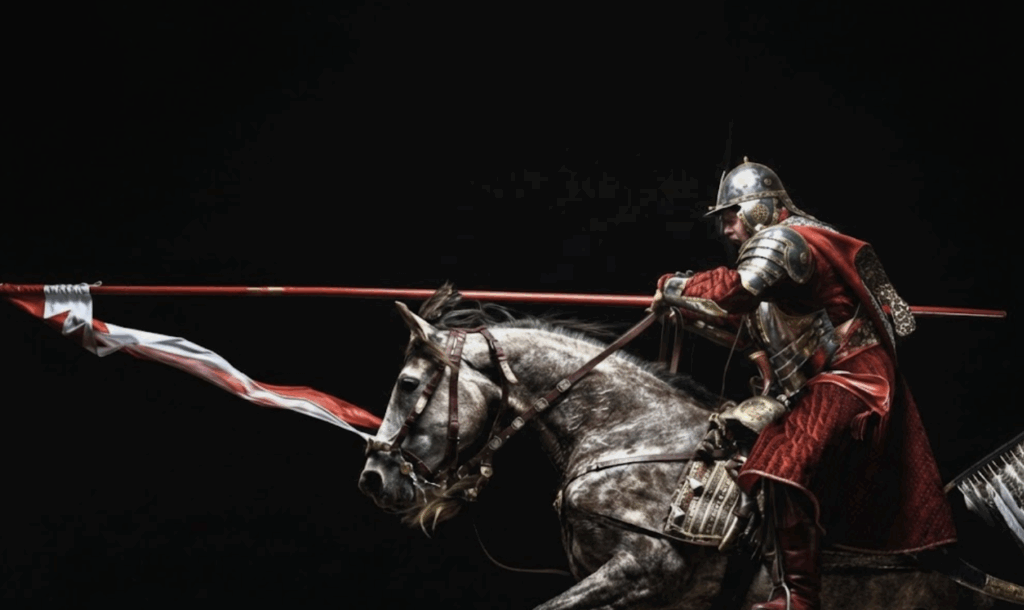
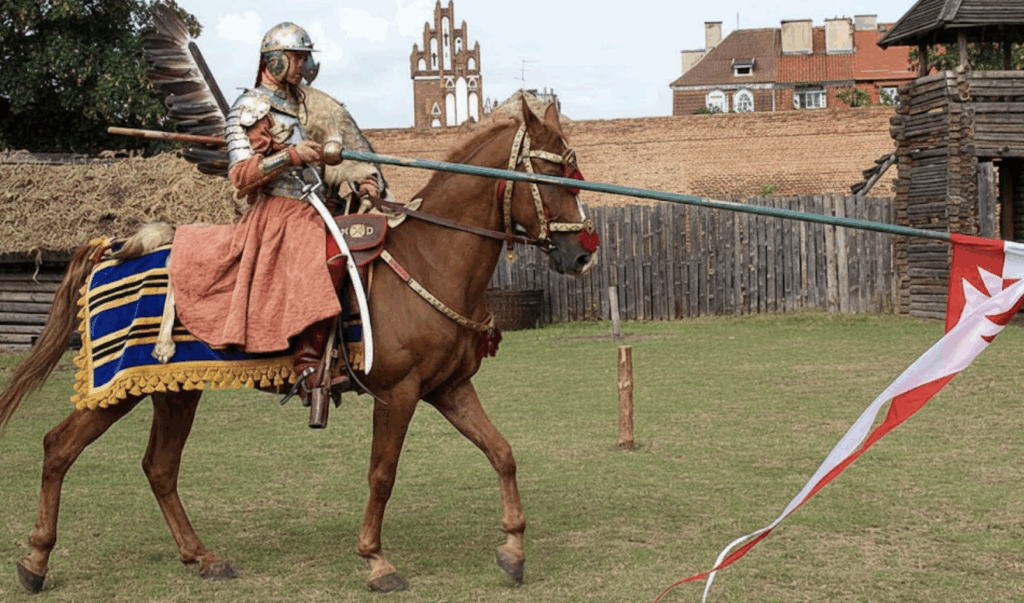
The kopia lance was the hussar’s primary weapon, and it was extraordinary. Ranging from 4.5 to 6 metres in length, these hollow fir-wood lances were topped with forged steel points and featured large wooden balls (gałka) as hand guards. A silk or taffeta pennon flew just below the point, adding to the visual spectacle.
Provided by the king or banner owner, these lances were designed to shatter on impact—by design, not defect. Supply wagons carried spares, allowing hussars to execute multiple devastating charges in a single battle.
Blades and Firearms
Beyond the lance, hussars carried an impressive array of weaponry:
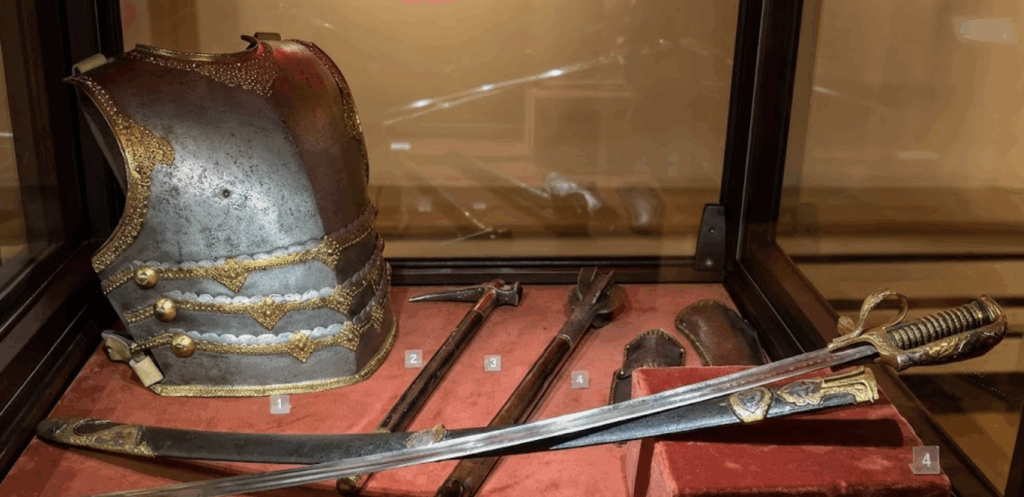
- The koncerz (stabbing sword): Up to 1.5 metres long, carried under the left thigh
- The szabla (sabre): The famous curved Polish sword, worn on the left side
- Pistols: One or two wheellock or flintlock pistols in saddle holsters
- Carbines: Mandatory for retainers from the 1680s onwards
- Secondary weapons: War hammers, horseman’s picks (nadziak), maces, and occasionally composite bows
Armour: Protection Without Sacrifice
Hussar armour was a marvel of 17th-century military engineering. Despite offering comprehensive protection, it weighed only around 15 kilograms—lighter than a modern soldier’s full combat load.
A fully equipped hussar wore:
- A szyszak (lobster-tailed helmet) with adjustable nasal guard and cheekpieces
- Cuirass (breastplate) and backplate with gold ornamentation
- Gorget, shoulder guards, and arm protection
- Mail coat or padded garment with mail sleeves
- Optional leg and thigh protection
This armour could stop pistol shot and deflect sword strikes whilst still allowing the mobility essential for cavalry operations. Some officers adopted the karacena—scale armour of Persian origin—particularly during King John Sobieski’s reign.
The Charge: Shock and Awe Perfected
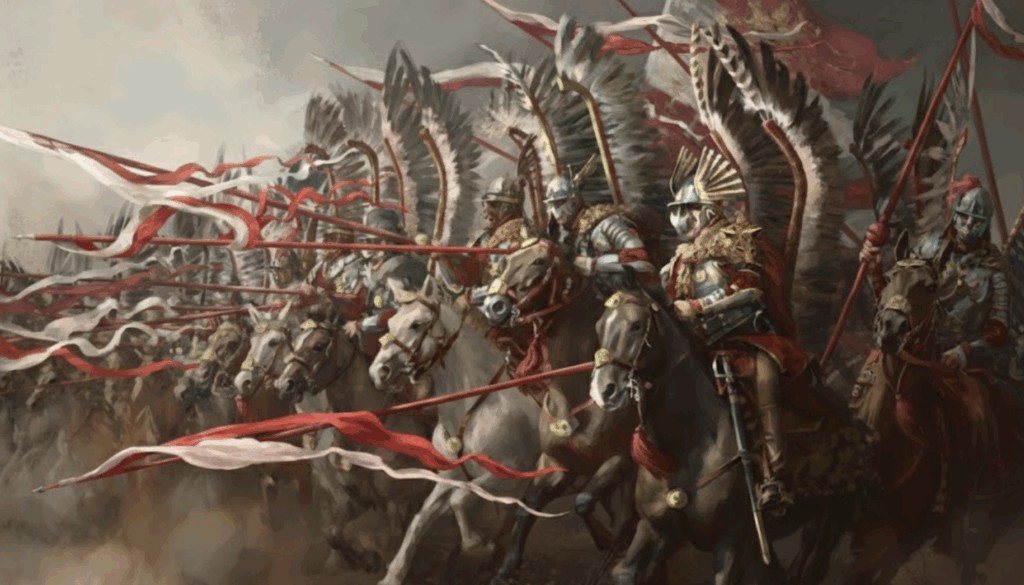
Hussar tactics centred on one devastating manoeuvre: the cavalry charge. But this wasn’t some mindless gallop into enemy lines. It was a precisely orchestrated tactical symphony.
The charge began at a measured pace in loose formation. As the distance closed, the hussars accelerated and tightened ranks, reaching maximum speed and closest formation just before impact. The effect was catastrophic. At Kircholm in 1605, hussars broke through Swedish pike-and-shot squares that should have been impenetrable to cavalry.
What made this possible? First, the extraordinary quality of Polish horses—hybrids of native Polish stock and Eastern breeds, bred specifically for fearlessness, endurance, and agility. These animals could carry over 100 kilograms and still execute complex manoeuvres. Selling a hussar horse outside the Polish-Lithuanian Commonwealth carried the death penalty.
Second, the hussars’ willingness to repeat charges. If the first assault didn’t break enemy lines, they’d reform and charge again. And again. This relentless aggression, combined with the shock value of their appearance and the reach of their lances, made them nearly unstoppable.
Kircholm 1605: The Impossible Victory
The Battle of Kircholm stands as the hussars’ finest hour—and one of the most lopsided victories in military history.
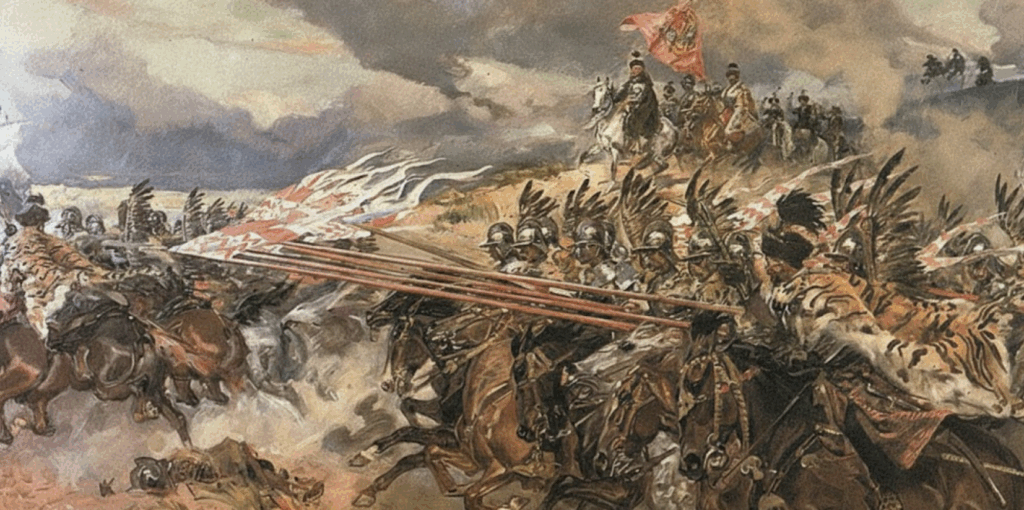
On 27 September 1605, Field Hetman Jan Karol Chodkiewicz faced an impossible situation. His 3,440-strong Polish-Lithuanian force was outnumbered three-to-one by 10,858 Swedes under King Charles IX. The Swedes held a strong defensive position on high ground, their infantry formed in modern pike-and-shot squares, their artillery positioned to sweep the approaches.
Chodkiewicz employed masterful deception. He feigned retreat, luring the confident Swedes down from their heights. When Charles took the bait, Chodkiewicz sprung his trap. Wave after wave of Winged Hussars crashed into the Swedish cavalry wings, routing them in minutes. The hussars then turned on the Swedish infantry squares.
The results were catastrophic. Contemporary reports state that 8,000–9,000 Swedish soldiers died—roughly 80% of their army. Polish-Lithuanian casualties? Just 100 killed and 200 wounded.
King Charles survived only because an officer gave up his horse, and the king’s helmet deflected a sword blow that would have killed him. He rode “hell for leather” back to Riga, abandoning his army to its fate.
Vienna 1683: The Hussars Save Europe
If Kircholm showcased hussar tactical brilliance, the relief of Vienna demonstrated their strategic impact.
By September 1683, Vienna had endured a two-month siege by Grand Vizier Kara Mustafa’s Ottoman army. The city’s defences were crumbling, ammunition running low, disease rampant. Relief came from King John III Sobieski of Poland, leading a combined Christian force of over 65,000 troops.
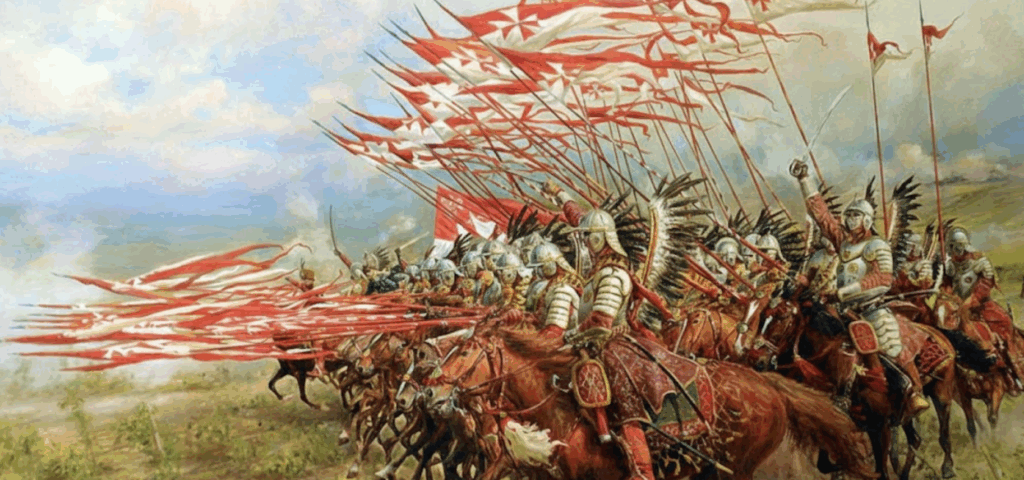
On 12 September, Sobieski personally led 3,000 Winged Hussars in what historians consider the largest cavalry charge in history—18,000 horsemen total. The charge broke Ottoman lines almost immediately. Within hours, the siege was lifted and the Ottoman army routed, suffering 15,000 casualties compared to 1,500 Christian losses.
Pope Innocent XI granted Sobieski the title “Defender of the Faith.” Austrians erected a church atop Kahlenberg hill in his honour. The victory marked a turning point: never again would Ottoman forces threaten central Europe.
The Twilight of the Winged Knights
All military innovations eventually become obsolete, and the hussars were no exception.
By the 18th century, changing battlefield tactics and the rising cost of maintaining elite heavy cavalry made the hussars increasingly impractical. Firearms were becoming more reliable and deadly. Linear infantry tactics favoured disciplined musketry over cavalry charges. The hussars had become, in historian Jędrzej Kitowicz’s words, “funeral soldiers”—magnificent for ceremonies, less useful for modern warfare.
In 1776, during the military reforms of the Polish-Lithuanian Commonwealth, the hussars were officially disbanded and reorganised as kawaleria narodowa (national cavalry). They discarded their wings and heavy armour, transforming into a more conventional light cavalry force.
A Legacy That Endures
Though the Winged Hussars disappeared from battlefields, they never left Polish national consciousness. Today, they remain symbols of Polish military prowess and national identity. Their image adorns everything from military insignia to football club badges. The heavy metal band Sabaton dedicated an entire song to them.
For over 150 years, from the reforms of Stephen Báthory to the gates of Vienna, the Winged Hussars represented the pinnacle of cavalry warfare. They combined devastating tactical innovation with psychological warfare, elite horsemanship with sophisticated equipment. Against them, the famous Swedish pike-and-shot formations crumbled. Ottoman armies that had conquered half of Europe fled in terror.
Were they invincible? No. But for a brief, glorious period, they came remarkably close.
The next time you see an image of those iconic wings and that impossibly long lance, remember: this wasn’t just theatre. This was one of history’s most effective fighting forces, and their victories weren’t luck—they were the result of superior training, equipment, tactics, and above all, the sheer audacity to charge headlong into impossible odds and emerge victorious.

Bartosz
Bartosz is a travel writer, photographer & founder/editor of theuniquepoland who tells stories of adventure, history and current affairs. He writes mainly about travel, with special focus on Poland. He loves travelling, discover new unknown and inspire others.


You May Also Like

Jumpstart Your Polish: Essential Phrases for Starters

The Ultimate Guide to Polish Slang – Spicing Up Your Language Skills
