-
The Polish Winged Hussars: Europe’s Most Fearsome Cavalry
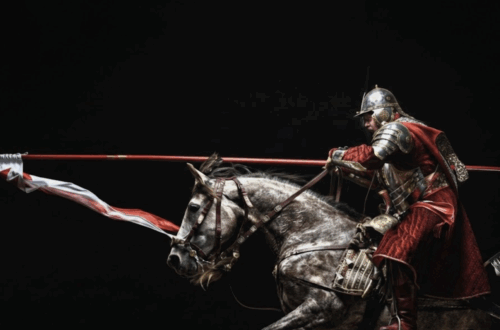
Picture this: you’re a Swedish infantryman at dawn on 27 September 1605, standing in formation near Kircholm. Then you see them—thousands of armoured horsemen thundering down from the hills, their backs adorned with enormous wooden frames bristling with eagle feathers, their 19-foot lances gleaming in the morning sun. The ground shakes. Your officers shout orders, but it’s already too late. Welcome to the terrifying world of the Polish Winged Hussars, perhaps the most elite—and certainly the most theatrical—cavalry force in European history. From Mercenaries to Legends: The Hussar Evolution The story of the Winged Hussars begins not with Polish nobility, but with Serbian mercenaries. The word “hussar” derives from the…
-
German Concentration Camps in Poland During World War II
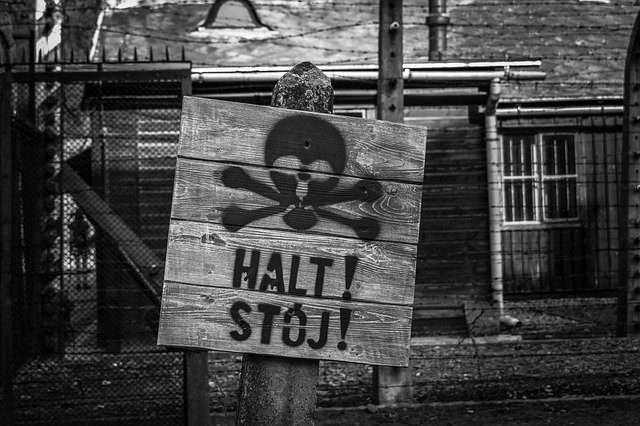
During the Second World War, the German Third Reich established a series of concentration and extermination camps in occupied Poland as part of their racial policy and plan for the genocide of Jews. The establishment of these camps represented one of the darkest periods in human history. Concentration Camp Location Estimated Number of Victims Date Established Auschwitz-Birkenau Oswiecim 1.1 Million1 May 1940 Belzec Belzec 434,5002 March 1942 Chelmno Chelmno on Ner 320,0003 December 1941 Majdanek Lublin 78,0004 July 1941 Sobibor Sobibor 170,0005 May 1942 Treblinka Treblinka 925,0006 July 1942 *Please note that these are rough estimates, as the exact numbers are hard to determine due to the nature of the…
-
The Top 10 Polish Monarchs Who Shaped History
Poland’s rich tapestry of history is intricately woven with the stories of its monarchs. From the 10th century, when the foundations of the Polish state were laid, to the 18th century, Poland was ruled by a series of influential dukes and kings. Let’s embark on a journey through time, exploring the lives and legacies of the ten most impactful Polish monarchs. 1. Mieszko I One of the most legendary of these is undoubtedly Mieszko I. Widely regarded as the architect of the Polish state, his rule in the 10th century left an indelible mark on the country’s cultural and political landscape. Under his leadership, Poland saw the introduction of Christianity,…
-
Auschwitz Liberation Day; The End of The Holocaust
Auschwitz Liberation Day commemorates Nazi crimes worldwide. On January 27 in 1945, prisoners held captive by the Nazis in Auschwitz were liberated by the Soviet soldiers. What they found was fathomable. A pile of eyeglasses weighing over 80 pounds, hundreds of prosthetic limbs, thousands of kitchen utensils including pots and pans, human hair, and more than 40,000 pairs of prisoners’ shoes all make up some of the items found at the site. Most of the owners of these properties died, many murdered by the German forces in the Holocaust’s largest extermination and concentration camp. Even though the camp seemed abandoned by the Nazis, it was still filled with thousands of people…